
Balance: The Missing Link in Athletic Performance
Good athletic performance depends on a wide range of factors, including strength, speed, and skill. But there’s one that often gets overlooked: balance.
Balance and stability are what allow an athlete to cut, pivot, land, and recover with control. Without a strong sense of balance, movements can become inefficient, reducing overall power. Worse, your injury risk goes up.
Fortunately, the team at First Colony Aquatic and Rehabilitation Center is here to help you train your balance so you can see improvements in your overall sports performance.
Why Balance and Stability Matter for Athletes
The terms “balance” and “stability” are often used interchangeably, but they actually refer to two separate but related concepts:
- Balance is your body’s ability to stay controlled over its base of support.
- Stability is your ability to maintain that control during movement.
Together, they form the foundation for nearly every athletic skill. When an athlete lacks balance or stability, their movements become less efficient, their reaction time slows down, and they put increased stress on their joints.
Even small deficits can have a big impact.
How Balance Impacts Different Sports
Running and Track
Running requires single-leg stability with each step. Poor balance can lead to overuse injuries like shin splints or runner’s knee.
Basketball
Basketball’s quick direction changes depend on good body control, and strong balance is essential for safe landings after a jump.
Football
Balance is critical for staying upright during tackles and blocking. Linemen rely on a stable base to generate force and protect joints, while running backs and receivers need balance to change direction quickly and avoid defenders.
Soccer
Kicking, cutting, and sprinting all require strong core and hip stability. Balance also helps you maintain control during in-game contact.
Tennis
Those rapid lateral movements across the court require coordination and postural control. Enhanced balance also supports accuracy and power during strokes.
Weightlifting
Stable positioning is critical for force production, and a loss of balance reduces strength output and increases injury risk.
What Balance Training Looks Like for Athletes
Like other sports performance programs at First Colony Aquatic and Rehabilitation Center, balance training is a structured plan that progresses from simple to complex movements. Our goal is to help you improve control, strength, and reaction time under real-world conditions. Here’s what you can expect:
Foundational Exercises
These build awareness and control. They may seem simple, particularly to an athlete, but they lay the foundation for more advanced work.
Examples
- Single-leg stands
- Heel-to-toe walking
- Core activation exercises
Progression to Dynamic Movements
Once control improves, we’ll introduce more challenging exercises designed to train the body to stay stable during motion.
Examples
- Single-leg squats
- Lunges with rotation
- Step-down exercises
- Controlled jumping and landing drills
Unstable Surface Training
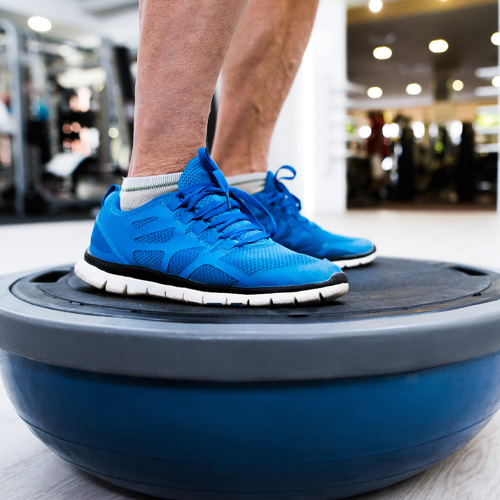
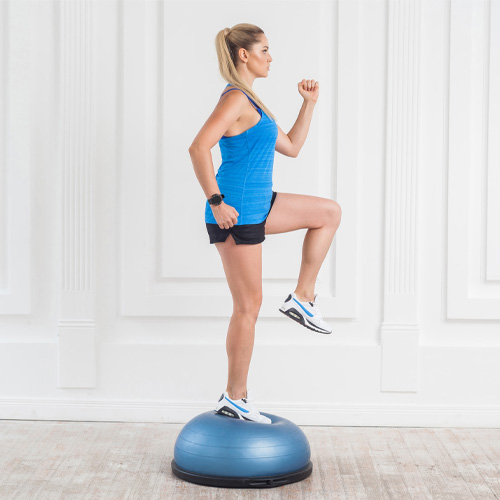
The previous exercises are generally performed on stable surfaces. Adding instability forces your body to adapt, helping improve reflexes and joint control.
Examples
- Balance pads or foam surfaces
- Stability balls
- Perturbation training (unexpected pushes or pulls while you’re holding a balance)
Sport-Specific Training
The most effective programs align with the demands of the sport, ensuring carryover to real-world performance.
Examples
- Cutting drills for field athletes
- Jump-landing mechanics for court sports
- Rotational control for racket sports
- Load control for strength athletes
Neuromuscular Training
This type of training improves communication between the brain and muscles, helping reduce injury rates and improve performance outcomes.
Examples
- Agility drills
- Reaction-based exercises
- Direction change training
When Should You Focus on Balance Training?
Balance work is valuable for athletes at every stage of activity or recovery, including:
- Early in rehab after injury, especially for the ankle, knee, or hip, where stability is often reduced
- During off-season training to build a strong foundation and address movement deficits before competition starts up
- As part of warm-ups and injury prevention programs to help prepare the body for dynamic movement
- Returning to sport after time away, as it helps restore confidence and control during higher-level activity.
Take Control of Your Performance
If you want to move faster, cut sharper, and stay in the game longer, balance matters. With the right guidance from the First Colony Aquatic and Rehabilitation Center team, improving your balance can help enhance control, reduce injury risk, and build your confidence.
Let’s build a plan that helps you move stronger, faster, and with more control. Schedule your initial evaluation today.

Return to PT at First Colony!
Miss feeling your best? Come back to First Colony Aquatic and Rehabilitation Center & Sports Therapy Center and let us help you get there—schedule your appointment today!
Staff Spotlight: Kael
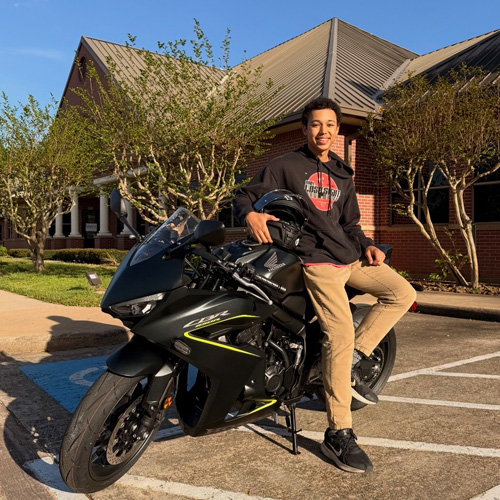
Kael first joined the FCAR/STC family in the fall of 2024. He is currently enrolled at HCC studying for his business associates. His hobbies include fencing, crocheting, art, and most importantly motorcycles, as he just recently got his own brand new bike! He also aspires to one day become a firefighter and is currently working towards that goal. He is a crucial member of our front office staff and you can find him at Sports Therapy Center.
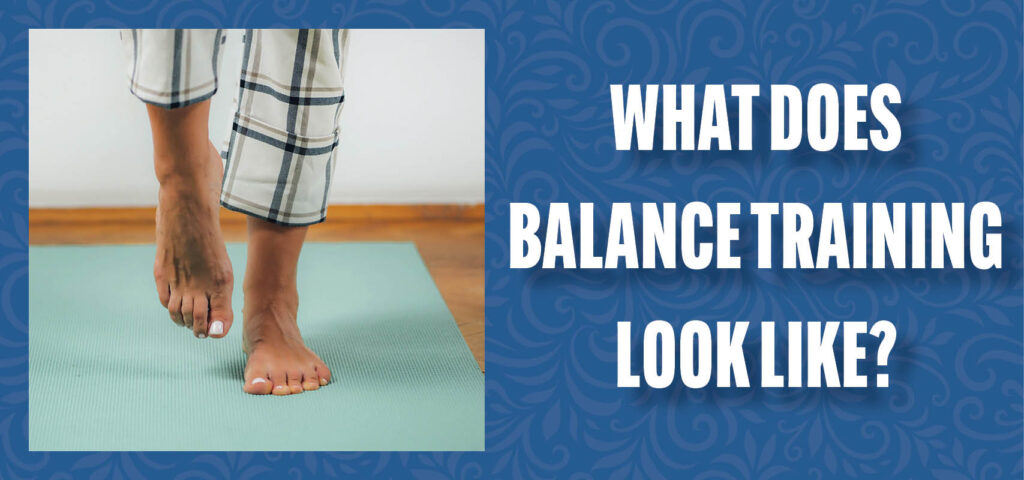
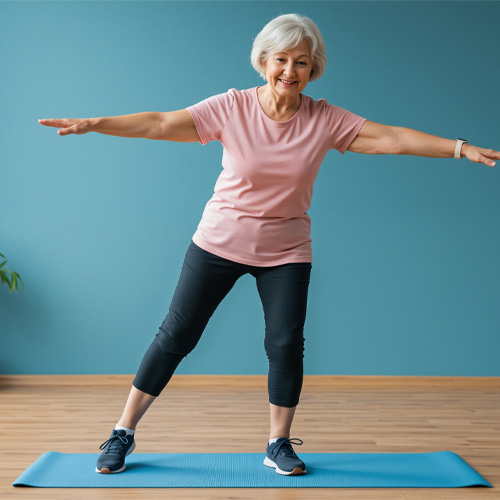
Balance training consists of targeted exercises that challenge–and thus improve–your overall balance and stability. Our physical therapists arrange these exercises progressively, which allows you to start where you feel most comfortable. Over time, you’ll be able to perform more and more challenging balance exercises.
Below are some sample balance exercise progressions to give you an idea of what to expect. But to ensure you’re performing the right exercises for your ability level, schedule an appointment at First Colony Aquatic and Rehabilitation Center!
Balance Exercise Progressions
One-Legged Stands
- Beginner: Stand facing the wall, your arms outstretched, fingers lightly touching the wall. Lift one leg and keep a slight bend in the standing leg. Hold for 5-10 seconds.
- Intermediate: Perform the same motion as above–but don’t touch the wall for support.
- Advanced: Perform the same motion as the intermediate progression–but keep your eyes closed. It’s harder than it sounds!
Tandem Stance
- Beginner: Stand with your feet heel-to-toe, as if standing on a tightrope.
- Intermediate: Stand in the same stance as above, but do it on a pillow (which adds instability). You can also try closing your eyes.
- Advanced: Walk heel-to-toe without using any support. Try to go 10-20 feet before taking a rest.
Patient Testimonial
“I have done aquatic therapy 3 days a week for the last few months, and I’ve really enjoyed it! The staff here is wonderful—so helpful and easy to talk to. I’ve had to quit my therapy for some surgery that is upcoming in the near future, but I plan to sign up for all future physical therapy at this location. It has been a wonderful experience, and I highly recommend them.”
-Deborah A.


Healthy Recipe
Smoked Salmon, Avocado and Cucumber Bites
These Smoked Salmon, Avocado, and Cucumber Bites are crisp, refreshing, and packed with rich, savory flavor in every bite. They make an elegant yet easy snack or appetizer that’s perfect for light, feel-good indulgence.
Ingredients:
- 1 medium cucumber
- 1 large avocado, peeled and pit removed
- 1/2 tbsp lime juice
- 6 oz smoked salmon
- chives, for garnish
- black pepper, for garnish
Directions:
Slice the cucumber approximately 1/4-inch thick and lay flat on a serving plate. Add the avocado and lime juice to a bowl and use a fork to mash until creamy. Assemble the bites by spreading a small amount of avocado on each cucumber, then topping with a thin slice of smoked salmon. Garnish each bite with finely chopped chives and cracked black pepper. Serve immediately.
Follow Us on Social Media!
Share Your Success Story
Love your experience with First Colony Aquatic and Rehabilitation Center & Sports Therapy Center? Click the button to leave us a Google review—your feedback helps others find the care they need!
Thank you for subscribing to First Colony Aquatic and Rehabilitation Center & Sports Therapy Center
Refer a Friend

Our purpose at First Colony Aquatic and Rehabilitation Center & Sports Therapy Center is to leave a greater impact on the community around us. In order to achieve our goal we want to change as many lives as possible as we become a beacon of positivity in our community.