

Spring Into Movement: Managing Hip Pain and Improving Athletic Mobility
Our mild spring weather makes March one of the best times of year to get out and about here in Houston. People across the city will be hitting the tennis and pickleball courts, exploring the hiking trails around the bayou, and gearing up for baseball season.
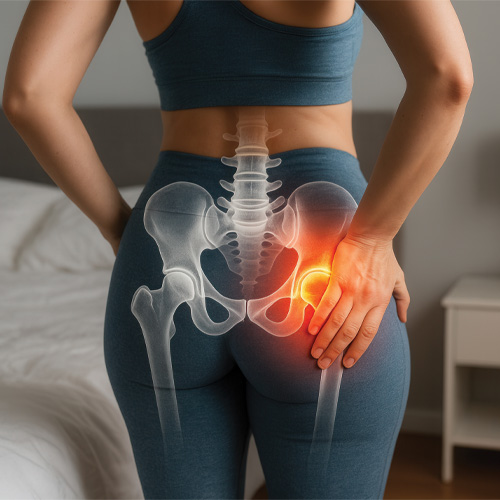
The last thing you want is to be dealing with hip pain right as the weather gets nice. Hip issues can limit speed, power, and agility. They can also change how you move, potentially impacting your knee, back, or ankle.
Fortunately, the team at First Colony Aquatic and Rehabilitation Center can help you understand the source of your hip pain so you can enjoy all that spring has to offer.
What’s Causing My Hip Pain?
Hip Flexor Strain or Overuse
Your hip flexors help lift your knee and drive your leg forward during sprinting, kicking, and uphill running. When they’re overloaded, the muscle fibers can become irritated or strained, leading to pain in the front of the hip or deep in the groin. This often shows up after a sudden jump in speed work, kicking volume, or high-rep core training.
Glute Weakness and Poor Hip Control
Your glutes stabilize the pelvis and keep the hip aligned when you land, cut, or run on one leg. If they aren’t strong enough, the hip may collapse inward or rotate excessively, which can stress other tissues. Many athletes feel this as outer hip soreness, fatigue during longer workouts, or knee pain that seems to start from the hip.
Hip Impingement
Hip impingement occurs when the ball-and-socket joint gets pinched during deep hip bending, such as squats, lunges, or sitting low. Over time, repeated pinching can irritate the labrum, a ring of cartilage that helps stabilize the hip joint. Athletes often describe a sharp pinch in the front of the hip, along with clicking, catching, or pain when changing direction.
Tendon Irritation
Tendons connect muscle to bone, and they can become painful when they’re loaded too often without enough recovery. This is common in runners and field athletes, since tendons absorb force with every stride, jump, and landing. Symptoms are usually a deep ache that warms up during activity but comes back later, especially after stairs, hills, or heavy leg days.
Referred Pain from the Lower Back or SI Joint
Sometimes hip pain is actually coming from the lower back or the SI joint, which connects the spine to the pelvis. When these areas get stiff or irritated, they can send pain into the hip or buttock, even if the hip joint itself isn’t the main issue. This type of pain often changes with posture, worsens after sitting, and may be accompanied by back tightness or one-sided soreness.
Why Spring Activities Can Trigger Hip Pain
Hip pain usually builds over time. Often, it starts as a mild tightness or pinching sensation in the hip, only to progress to pain or stiffness if left unaddressed. That’s especially true if you dive into intense training or activity without easing into it, as often happens in the spring.
For example:
- A baseball player starts their pre-season training with long practices and repeated throwing
- A tennis player starts racking up lots of court time after neglecting cross-training over the winter
- A hiker starts squeezing in as many weekend hikes as they can before the weather gets too hot
All of these activities put a great deal of stress on the hip, increasing your risk of injury that can affect performance or, worse, put you on the sidelines.
How the Team at First Colony Aquatic and Rehabilitation Center Can Help
Our physical therapists will work with you to uncover the root of your hip pain and build a plan that fits your sports and goals. Depending on your needs, this plan might include:
- A full movement and strength assessment
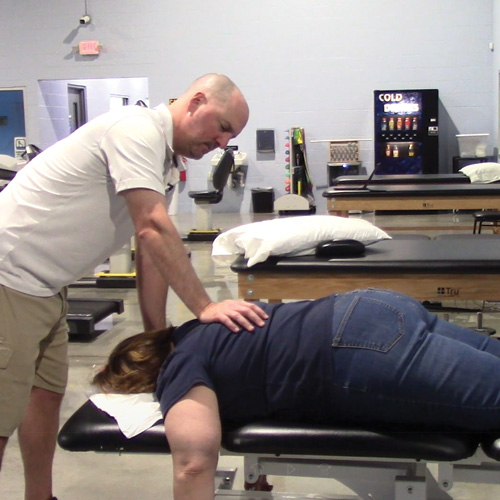
- Hands-on manual therapy when needed
- Targeted strengthening for hips, core, and legs
- Aquatic therapy options for joint-friendly progress
- Sport-specific return-to-play training
Let’s Make the Most of March!

We know you’re excited to get started with your favorite springtime activities, but don’t let hip pain hold you back. Schedule an appointment with First Colony Aquatic and Rehabilitation Center to receive the right treatment plan to help you move better and compete with confidence.

Return to PT at First Colony!
Miss feeling your best? Come back to First Colony Aquatic and Rehabilitation Center & Sports Therapy Center and let us help you get there—schedule your appointment today!
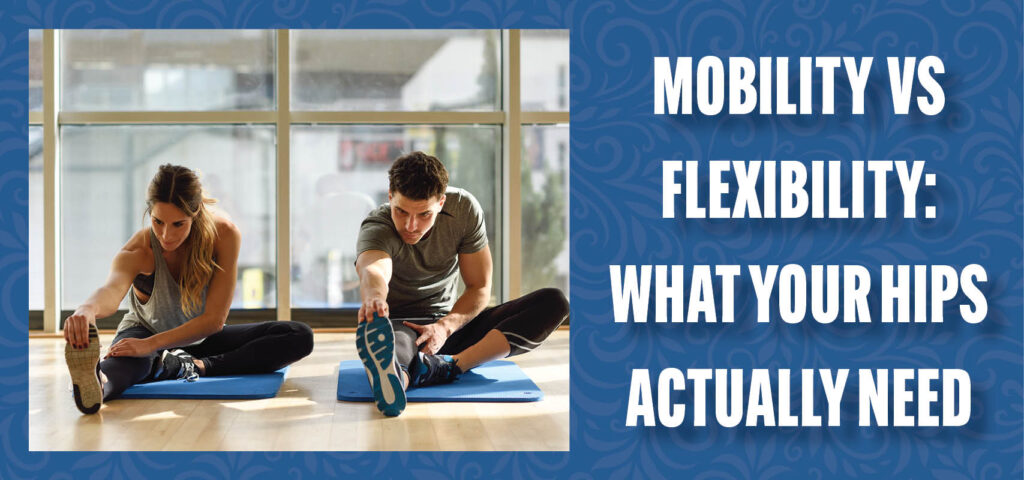
Tight hips are a common complaint, even if you’re physically active. But a lot of people don’t really understand what “tight” hips mean. They often assume it’s a matter of flexibility when actually, it’s a matter of mobility.
What’s the Difference?
Flexibility is how far muscle tissue can lengthen. Whenever you do a hamstring stretch, you’re testing the limits of the flexibility in your hamstring muscles.
Mobility refers to how well your hip joint moves with control. It includes range of motion, strength, and coordination.
Which Area Should You Focus On?
Many people talk about flexibility when they really mean mobility, which can cause confusion, since mobility is the higher priority for most people, including most athletes and active people. Mobility supports better movement quality, which can improve performance and lower injury risk.
This means you might have flexible muscle tissue throughout your hips, but if you don’t have the necessary strength or control, you may still experience pain, pinching, or improper mechanics.
Good mobility also carries over to sport skills like:
- Sprinting with longer, cleaner stride mechanics
- Cutting without the knee collapsing inward
- Landing with better hip stability
- Squatting and hinging without the low back taking over
Signs You Need to Work on Hip Mobility
- Pinching in the front of the hip during squats or lunges
- Outer hip soreness after running
- One hip feels weaker or “off” during single-leg work
- Your knee caves inward when you jump or change direction
- Your lower back gets tight during leg workouts
Improve Your Hip Mobility at First Colony Aquatic and Rehabilitation Center
If you have any of the signs of poor mobility, schedule an appointment with us today! Our team can identify what’s limiting your hip movement and build a plan tailored to your goals.
Patient Testimonial
“Sean was super nice and immediately knew what was wrong. His staff were caring, friendly, and always made me feel welcome! I highly recommend going here for anyone who is looking for a physical therapist to get better.”
-D.B.


Happy St. Patrick’s Day from First Colony Aquatic and Rehabilitation Center & Sports Therapy Center! 🍀 We’re feeling lucky to support your journey to better movement, strength, and health all year long. Wishing you a day filled with good cheer, great health, and a little extra Irish luck!
Seasonal Recipe
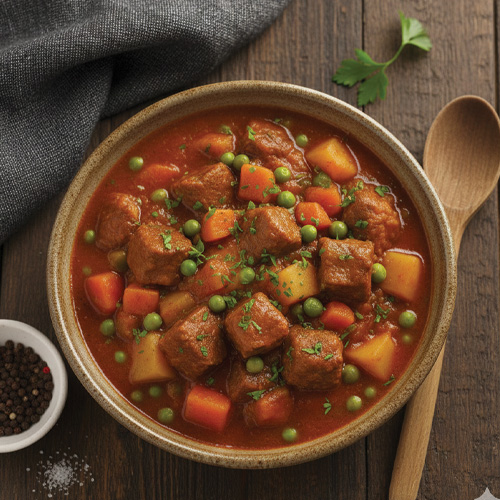
Best St. Patrick’s Day Crock Pot Irish Stew
This Crock Pot Irish Stew is a hearty, comforting classic that’s perfect for celebrating St. Patrick’s Day. Slow-cooked and full of rich flavor, it’s an easy, cozy meal to enjoy with family and friends. 🍀
Ingredients:
- 2 lbs beef chuck roast, cubed
- 2 large potatoes, peeled and diced
- 2 cups diced carrots
- 1 envelope onion soup mix
- 2 (10¾ oz) cans tomato soup
- 1 soup can water
- 16 oz frozen peas
- salt and pepper, to taste
- parsley, for garnish
Directions:
- Combine beef, potatoes, carrots, soup mix, tomato soup, can of water, salt and pepper in Crock Pot.
- Cook on LOW 8 hours.
- Add frozen peas and ¼ cup water.
- Cook on LOW 1 additional hour.
- Garnish with parsley.
Follow Us on Social Media!
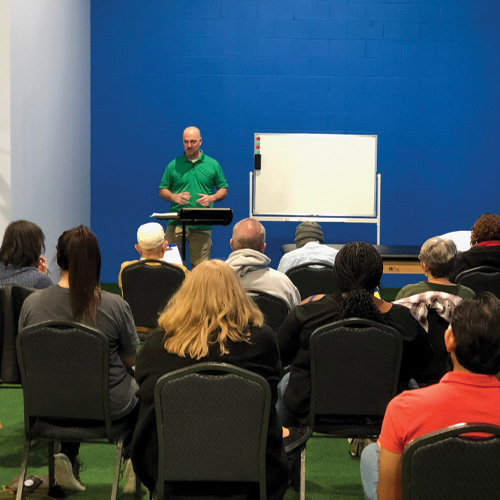
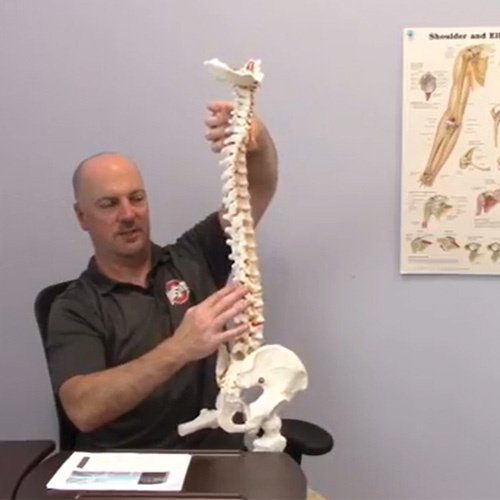
Low Back Pain Workshop
March 19th • 6PM
Join our Low Back Pain Workshop to learn what’s really causing your discomfort and how to start finding relief naturally. You’ll walk away with practical tips, expert guidance, and a clear plan to move and feel better.

Share Your Success Story
Love your experience with First Colony Aquatic and Rehabilitation Center & Sports Therapy Center? Click the button to leave us a Google review—your feedback helps others find the care they need!
Thank you for subscribing to First Colony Aquatic and Rehabilitation Center & Sports Therapy Center
Refer a Friend

Our purpose at First Colony Aquatic and Rehabilitation Center & Sports Therapy Center is to leave a greater impact on the community around us. In order to achieve our goal we want to change as many lives as possible as we become a beacon of positivity in our community.