
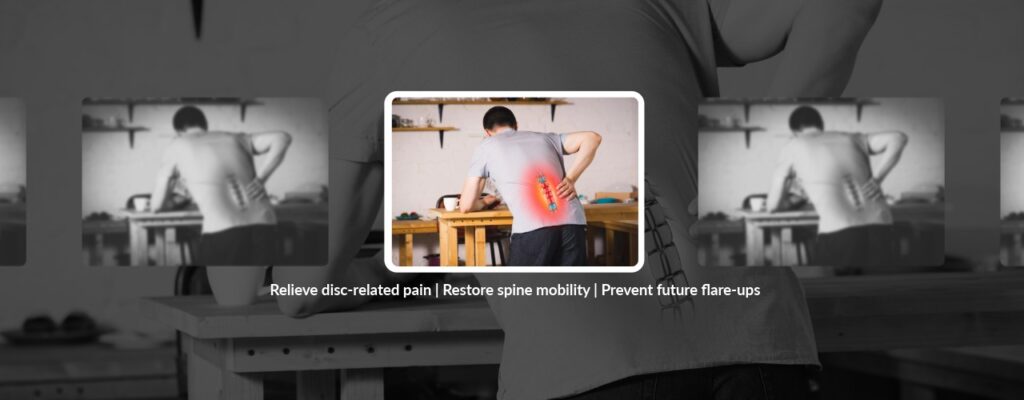

Back pain is one of the most common health concerns among adults, and one of the most frequent causes is a herniated disc. While back pain from a herniated disc can sound intimidating, learning what’s happening inside your spine—and how the team at First Colony Aquatic and Rehabilitation Center can help—often brings relief and reassurance.
First Things First: What Is a Herniated Disc?
The spine consists of a series of bones called vertebrae, separated by soft, cushion-like discs. Each disc acts as a shock absorber, allowing the spine to move smoothly while protecting the bones from impact.
A herniated disc occurs when the soft inner material of one of these discs pushes through a crack in the tough outer layer. If this herniation presses on nearby nerves, it can cause pain and inflammation.
Although herniated discs can occur anywhere in the spine, they’re most common in the lower back (lumbar spine), where movement and load-bearing are most significant. For this reason, herniated disks and lower back pain often go hand-in-hand.
How To Tell if Your Back is from a Herniated Disc
The symptoms of back pain from a herniated disc vary depending on the location and severity of the disc injury. Some people experience only mild discomfort, while others have pain radiating into the legs or arms. That said, typical symptoms include:
- Sharp or burning pain in the lower back or buttocks
- Tingling, numbness, or weakness in the leg or foot
- Pain that worsens with sitting, coughing, or bending
- Muscle spasms or difficulty standing upright
What Causes a Herniated Disc?
Several factors contribute to the development of herniated discs, including:
- Age-related disc degeneration
- Repetitive strain on the discs from heavy lifting, twisting, or prolonged sitting
- Slouching or improper body mechanics
- Sudden injuries, such as a fall or an abrupt twisting motion
- Insufficient spinal support from weak core muscles
Treating Back Pain from a Herniated Disc
The Role Of Physical Therapy
Physical therapy is one of the most effective nonsurgical options for managing back pain from a herniated disc. The team at First Colony Aquatic and Rehabilitation Center will work with you to create a personalized program that targets pain relief, restores movement, and strengthens the spine’s supporting muscles. Key components include:
Pain Management and Inflammation Reduction
- We use careful movement, targeted stretching, and manual therapy techniques to relieve pressure on the affected nerve and reduce inflammation.
Mobility Work
- Guided stretching helps restore range of motion, especially in the hips and hamstrings, which influence lower back movement.
Core Strengthening and Stability Training
- Strong core muscles help support the spine and distribute load evenly, decreasing stress on the injured disc. Exercises are performed under supervision to ensure safety and proper form.
Posture and Movement Retraining
- We teach correct body mechanics for sitting, lifting, and standing to prevent further strain. Simple adjustments in daily movement often lead to significant pain relief.
Gradual Return-to-Activity Programs
- Once pain decreases, we design progressive exercise plans that allow you to safely resume normal activities or sports without risking reinjury.
Will I Need Surgery?
Most patients improve with conservative treatments like physical therapy, medication, and activity modification. Generally, surgery is only recommended when symptoms persist after several months of consistent physical therapy. It’s also recommended in severe cases, such as significant leg weakness or affected bowel or bladder function. These cases are rare, however.
Even after surgery, physical therapy remains a vital part of rehabilitation to strengthen muscles and restore mobility.
Tips for Preventing A Herniated Disc
- Practice proper lifting techniques (bend at the knees, not the waist)
- Stay active with low-impact exercises like walking or swimming
- Strengthen the core and back muscles regularly
- Use ergonomic chairs or supportive cushions when sitting
Need More Information? Give Us a Call!
The team at First Colony Aquatic and Rehabilitation Center is always happy to help you better understand back pain from a herniated disc. If you’re dealing with pain, numbness, or tingling, schedule an appointment at our clinic to learn more about your treatment options.